
Scaffolding vs Cherry Pickers vs Scissor Lifts: Which Do You Need?
Scaffolding is not always the right tool for working at height. Cherry pickers, boom lifts, and scissor lifts all offer alternative ways to access elevated areas, each with their own strengths and limitations. Choosing the right option can save time and money, while choosing the wrong one can slow a project down or create unnecessary risk. This guide compares scaffolding against the main types of powered access equipment, so you can match the right solution to your project.
What Is a Cherry Picker?
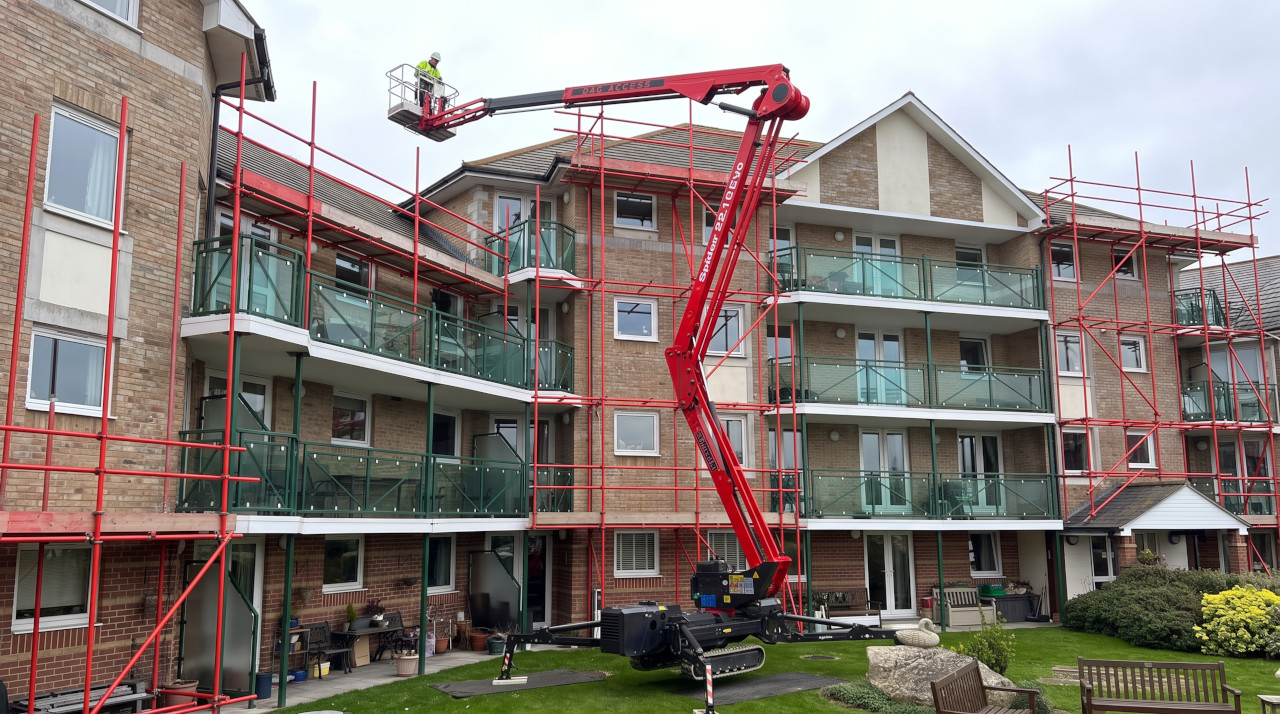
A cherry picker, also known as a boom lift, is a type of mobile elevating work platform consisting of a hydraulic arm with a basket at the end, mounted on a truck, trailer, or self propelled base. The arm extends both upward and outward, allowing a worker to reach specific points at height without needing a full supporting structure beneath them. Boom lifts are generally divided into telescopic booms, which extend in a straight line for maximum height and reach, and articulating booms, which have jointed sections allowing the platform to move around obstacles.
What Is a Scissor Lift?
A scissor lift is a mobile elevating work platform that raises a wide, stable platform straight up using a crisscrossing support structure beneath it. Unlike a cherry picker, a scissor lift only offers vertical movement directly above its base, with no horizontal reach. Its larger platform size makes it well suited to tasks requiring more than one worker, or where tools and materials need to be carried up together with the workers.
When Scaffolding Is the Better Choice
Scaffolding tends to outperform cherry pickers and scissor lifts in the following situations.
- Long duration projects. For work lasting weeks or months, scaffolding can remain safely in place for the full duration, avoiding the cost and disruption of bringing powered access equipment on and off site repeatedly.
- Larger work crews. Scaffolding allows multiple tradespeople to work simultaneously across a wide area, which significantly improves productivity on larger jobs compared to the single or dual occupancy of most cherry pickers.
- Heavy loads. Scaffolding can support the weight of building materials, tools, generators, and other equipment that needs to go up alongside the workers, something a compact cherry picker basket cannot accommodate.
- Interior access. Scaffolding is easily erected inside buildings to reach atriums, warehouses, and tall interior spaces where a vehicle mounted lift may not be able to access or manoeuvre.
- Full perimeter access. A scaffold built around an entire building facade or roofline provides continuous access and fall protection across the whole structure, rather than one point at a time.
- Irregular or tight spaces. The modular design of scaffolding allows it to be custom configured to fit into cramped or unusually shaped areas where a lift simply will not fit.
When a Cherry Picker Is the Better Choice
Cherry pickers and boom lifts tend to be the more efficient option in the following situations.
- Short duration tasks. For jobs lasting a few hours or days, a cherry picker can be brought in, used, and removed without the setup and dismantling time required for scaffolding.
- Single or isolated access points. If the work only needs to reach one specific high point, such as a light fitting, sign, or section of roofline, a cherry picker gets a worker there directly without building a structure around the whole area.
- Frequent repositioning across a large site. A self propelled boom lift can be driven to different points on a site under its own power, which is far quicker than repeatedly dismantling and rebuilding scaffolding.
- Outdoor sites with clear overhead access. Where there are no overhead obstacles such as power lines or trees, a cherry picker offers fast, direct vertical and horizontal reach.
- Tidier work sites. Because a cherry picker is only present when actively in use, it leaves a less obtrusive footprint on site compared to scaffolding that must remain standing for the duration of a project.
It is worth noting that cherry pickers do have some real limitations. Since they lift straight up and out from a single base position, they cannot easily avoid overhead obstacles such as power lines or tree branches in the way a scaffold structure can be built around them. They are also less efficient for continuous, all day access over long periods, since the constant need to reposition the machine can reduce overall productivity compared to a fixed scaffold platform.
When a Scissor Lift Is the Better Choice
Scissor lifts are generally the right choice when a wide, stable platform is needed directly above a fixed point, such as ceiling work, warehouse racking, or tasks requiring more than one worker and their tools and materials at height. Their vertical only movement makes them less flexible than a boom lift for reaching around obstacles, but their larger platform and higher load capacity make them well suited to jobs where stability and workspace matter more than horizontal reach.
Cost Considerations: Scaffolding vs Powered Access Equipment
Cost comparisons between scaffolding and powered access equipment depend heavily on the duration and scale of the project. Scaffolding typically involves a setup and dismantling cost, followed by a fixed daily, weekly, or monthly hire rate for the duration it remains standing, which can make it more cost effective for longer projects since there is no need to bring equipment on and off site repeatedly. Cherry pickers and scissor lifts are usually charged per day or per week of active use, which can be more economical for short, isolated tasks, but may become more expensive than scaffolding if a project runs for many weeks with the lift on site the entire time. For projects requiring the lift on the same site for an extended period, it is worth comparing the total cost of ongoing powered access hire against a scaffolding solution before deciding.
Making the Right Decision for Your Project
The right choice between scaffolding and powered access equipment comes down to a few key questions. How long will the work take? How many workers need access at the same time? How heavy are the materials and tools involved? Are there overhead obstacles to work around? Is the site indoors, outdoors, on level ground, or uneven terrain? A reliable scaffolding and access equipment supplier will walk through these questions with you and recommend the most efficient, safe, and cost effective option for your specific project, rather than defaulting to whichever equipment is easiest to supply.
Scaffolding vs Access Equipment FAQs
Is a cherry picker cheaper than scaffolding?
For short duration or single point access tasks, a cherry picker is often more cost effective than scaffolding, since it avoids setup and dismantling time. For longer projects requiring the equipment on site for many weeks, scaffolding can become the more economical option since it does not need to be repeatedly brought in and removed.
What is the difference between a cherry picker and a boom lift?
Cherry picker and boom lift are largely interchangeable terms. In general use, a cherry picker often refers to a towable or truck mounted unit that must be repositioned while lowered, while a boom lift can also refer to a self propelled unit that can be driven to a new position under its own power while partially raised.
Can a cherry picker be used instead of scaffolding for a roof job?
A cherry picker can be suitable for short, isolated roof tasks such as inspections or minor repairs at a single point. For full roof access, longer duration roofing projects, or jobs requiring multiple workers and materials at height simultaneously, scaffolding is generally the safer and more practical option.
Why can’t a cherry picker be used near power lines?
Because a cherry picker lifts straight up and out from its base position, it cannot manoeuvre around fixed overhead obstacles such as power lines in the way a scaffold structure can be designed and built to avoid them. Extra caution and clearance planning is required whenever access equipment is used near overhead electrical infrastructure.
How many workers can use a cherry picker at once?
Most cherry picker and boom lift baskets are designed for one or two workers at a time, along with a limited amount of tools. This is significantly fewer than scaffolding, which can support multiple tradespeople working across a wide area simultaneously.
Is a scissor lift the same as scaffolding?
A scissor lift and scaffolding both provide an elevated working platform, but a scissor lift is a powered, mobile piece of equipment that raises and lowers vertically under its own mechanism, while scaffolding is a static or wheeled structure that is manually assembled and does not move under power.
What access equipment is best for warehouse or ceiling work?
Scissor lifts are generally well suited to warehouse and ceiling work, since their wide, stable platform allows workers to carry tools and materials directly beneath the area being accessed, with the ability to reposition across the floor as needed.
Do I need scaffolding or a lift for a multi storey building exterior?
For full exterior access to a multi storey building over an extended period, scaffolding tied and braced to the structure is generally the standard and safest approach, since it provides continuous access and fall protection across the entire facade rather than one section at a time.
Can powered access equipment be used indoors?
Yes, certain types of scissor lifts and compact boom lifts are designed for indoor use in warehouses, retail spaces, and offices. The suitability depends on the size of the space, floor surface, and height required, which should be confirmed with your access equipment supplier before booking.
What should I consider before choosing between scaffolding and a cherry picker?
Key factors include how long the work will take, how many workers need access at once, how heavy the materials and tools are, whether there are overhead obstacles, and whether the site is indoors, outdoors, level, or uneven. Discussing these factors with your supplier will help determine the safest and most cost effective solution for your project.