
Types of Scaffolding, A complete guide
Choosing the right type of scaffolding is one of the most important decisions on any construction, maintenance, or renovation project. The wrong system can slow down work, increase costs, or create unnecessary safety risks, while the right system gives your team a stable, efficient platform matched to the job at hand. This guide covers the main types of scaffolding available in South Africa, how they differ, and which situations each one is best suited to.
Modular Scaffolding Systems
Modular scaffolding, also called system scaffolding, is the most widely used category of scaffolding today. Unlike traditional tube and coupler scaffolding, modular systems consist of prefabricated components that connect at fixed, standardised points. This makes assembly and dismantling considerably faster, while still providing a strong and predictable structure. The three modular systems you will encounter most often on South African sites are Kwikstage, Cuplock, and Ringlock.
Kwikstage Scaffolding
Kwikstage scaffolding is recognised by the triangular pressings on its vertical standards, which allow up to four ledgers to be connected at the same node point. It is quick to erect and dismantle, making it a practical choice for light to medium duty work such as residential renovations, painting, plastering, and general building maintenance. Its straightforward, repeatable connection design makes it well suited to projects with regular layouts and standard scaffold bays.
Cuplock Scaffolding
Cuplock scaffolding uses a system of upper and lower cups at each node point to lock ledgers and transoms in place, secured with a few sharp hammer blows. This robust locking mechanism makes it a strong option for heavy duty support and shoring work. Cuplock is commonly used for building renovations, structural support during construction, and industrial applications where load bearing capacity is important.
Ringlock Scaffolding
Ringlock scaffolding, sometimes called rosette scaffolding, features vertical standards with ring shaped node points positioned at regular intervals. This design allows braces and ledgers to be connected at multiple angles, making Ringlock especially useful for complex or irregular structures. It is a strong choice for industrial applications such as refineries, shipyards, and large scale commercial builds where the scaffold needs to follow an unusual building shape or support heavy, varied loads.
Tube and Coupler Scaffolding
Tube and coupler scaffolding is the traditional scaffolding method, built from separate standard tubes joined together using couplers and fittings. Unlike modular systems, tube and coupler scaffolding is not restricted to fixed connection points, which makes it highly adaptable for unusual shapes, curved structures, or sites where a standard modular bay size will not fit. The tradeoff is that it takes longer to erect and requires more skilled labour to assemble correctly, since every connection point depends on the coupler rather than a pre-engineered fixed joint.
Frame Scaffolding
Frame scaffolding is built from prefabricated vertical frames connected with braces, and includes variations such as walk-through frames, H-frames, and ladder frames. It is generally quick to assemble and was historically popular for straightforward building access. It is important to note that under the updated South African scaffolding standard, SANS 10085-1:2024, older style frame scaffolds and trestle scaffolds, commonly referred to as bokkies, no longer conform to the code and are no longer permitted for use on South African sites. Any scaffolding hire company you work with should be able to confirm that the equipment and systems supplied are fully compliant with the current standard.
Mobile Scaffolding vs Static Scaffolding
Beyond the different scaffold systems themselves, scaffolding can also be configured with or without wheels, and choosing correctly between the two has a real impact on efficiency and safety.
Mobile Scaffold Towers
A mobile scaffold tower, often aluminium scaffolding, is a manually erected, wheeled scaffold structure fitted with lockable castors, allowing it to be moved between working positions without being dismantled. Mobile towers are the right choice for short duration tasks at a fixed working height, particularly indoors, such as ceiling work, painting, electrical or plumbing maintenance, warehouse racking access, and retail or office fit outs. The ability to reposition the tower quickly without a full rebuild makes mobile scaffolding significantly more efficient for tasks that move across a large open area, such as painting a warehouse ceiling or servicing overhead infrastructure along a production line.
Mobile towers must always have their wheels locked before anyone climbs onto the platform, and should never be moved while a worker is standing on it. They are generally limited in height compared to static scaffolding and are best suited to firm, level, indoor or sheltered surfaces rather than uneven or exposed outdoor ground.
Static Scaffolding
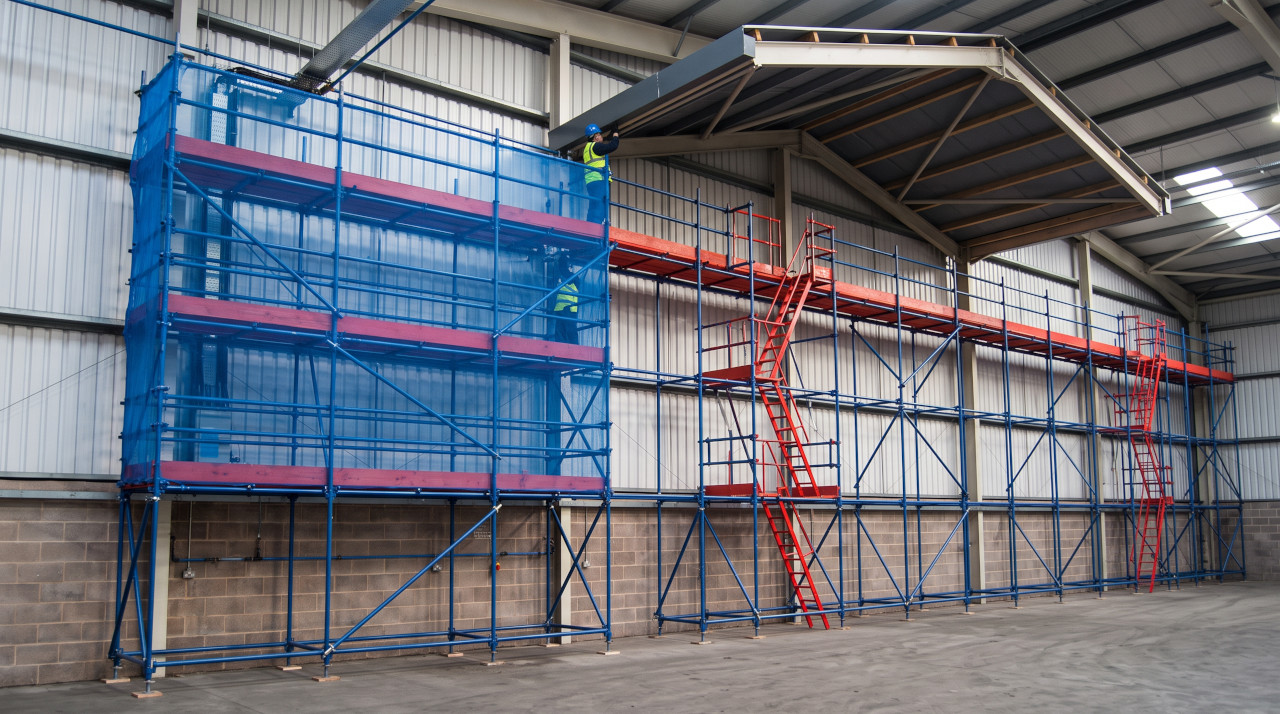
Static scaffolding is erected without wheels and is either freestanding or tied and braced to the structure it serves. It is the correct choice for taller builds, longer duration projects, heavier loads, and any work where the scaffold needs to remain securely in place for days, weeks, or months at a time. Static scaffolding can also be built up in multiple lifts to reach significant heights, something a mobile tower is not designed to do safely. For full building facades, multi-storey construction, or any project requiring sustained access over an extended period, static scaffolding tied into the structure is the standard and safest approach.
Choosing the Right Scaffold for Your Project
The right scaffolding choice depends on the height required, the duration of the work, the load the platform needs to carry, the number of workers needing simultaneous access, and the shape and condition of the site itself. As a general guide, Kwikstage suits fast, light to medium duty jobs, Cuplock suits heavier duty and support applications, Ringlock suits complex or industrial structures, and mobile towers suit short, repositionable indoor tasks. A reliable scaffolding hire company will assess your project specifics and recommend the system that balances safety, efficiency, and cost most effectively for your particular job.
Types of Scaffolding FAQs
What is the most commonly used type of scaffolding?
Modular scaffolding systems, particularly Kwikstage, Cuplock, and Ringlock, are the most commonly used types of scaffolding today. Their prefabricated components and standardised connection points make them faster to erect and dismantle than traditional tube and coupler scaffolding, while still providing strong, reliable support.
What is the difference between Kwikstage, Cuplock, and Ringlock scaffolding?
Kwikstage is best suited to light and medium duty work due to its fast, simple assembly. Cuplock is a strong option for heavy duty support and shoring applications. Ringlock allows connections at multiple angles, making it the preferred choice for complex or industrial structures with irregular layouts.
Is mobile scaffolding safe to use?
Mobile scaffold towers are safe when used correctly, including locking the wheels before use, never moving the tower while someone is standing on it, and only using it on firm, level ground. Mobile towers are designed for short duration, fixed height tasks rather than heavy or prolonged work.
Can scaffolding be moved once it is erected?
Static scaffolding is not designed to be moved once erected and must be fully dismantled and rebuilt in a new position. Mobile scaffold towers, by contrast, are fitted with wheels specifically so they can be repositioned without being dismantled, provided they are moved empty and with the wheels unlocked only for that purpose.
What type of scaffolding is best for a residential renovation?
Kwikstage scaffolding is generally well suited to residential renovations due to its quick assembly time and suitability for light to medium duty work such as painting, roofing, and general home maintenance.
What type of scaffolding is used for industrial or commercial projects?
Cuplock and Ringlock scaffolding are commonly used on industrial and large commercial projects, since both systems offer higher load bearing capacity and, in the case of Ringlock, the flexibility to follow complex or irregular building structures.
Is frame scaffolding still allowed in South Africa?
Older style frame and trestle scaffolds, commonly known as bokkies, no longer conform to the updated SANS 10085-1:2024 standard and are no longer permitted for use on South African construction sites. Any scaffolding supplied to you should meet the current compliant standard.
How high can a mobile scaffold tower go?
Mobile scaffold towers are generally limited to lower working heights compared to static scaffolding, since their wheeled base and lightweight design are not intended for the taller, multi-lift structures used in static scaffolding applications.
Do I need a different type of scaffolding for indoor and outdoor work?
Indoor work on firm, level flooring is often well suited to mobile scaffold towers, since they can be repositioned quickly across a room or warehouse floor. Outdoor work, uneven ground, or taller builds generally require static scaffolding that is properly based, tied, and braced for stability.
How do I know which scaffolding system is right for my project?
The right system depends on the height, duration, and load requirements of your project, along with site conditions and the number of workers who need access at once. A reputable scaffolding hire company will assess these factors and recommend the most suitable and cost effective system for your specific job.